-
0769-38866368



Industrial Wire Harness Applications in Modern Automation Systems
In today’s highly automated manufacturing environment, industrial equipment relies heavily on stable and well-engineered electrical interconnection systems. A wire harness is not just a collection of cables—it is a structured electrical architecture that directly impacts machine reliability, production efficiency, and system safety.
As a professional custom wire harness manufacturer, we design and produce industrial-grade cable assemblies for automation equipment, machinery, and control systems with strict performance and durability requirements.
The Role of Wire Harnesses in Industrial Systems
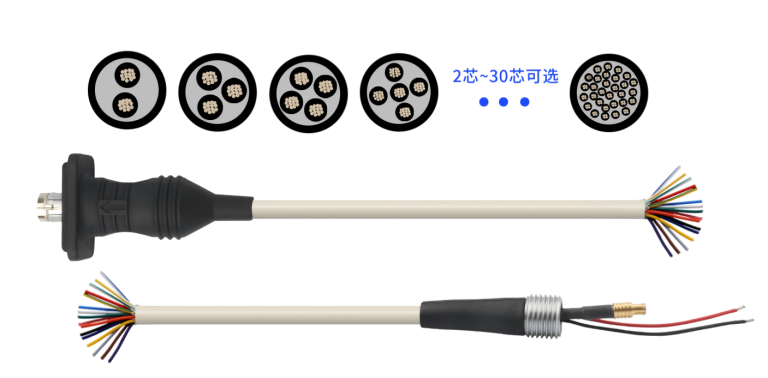
An industrial wire harness integrates multiple electrical conductors, connectors, and protective components into a single organized assembly. Its purpose is to ensure:
- Reliable power distribution
- Stable signal transmission
- Reduced electromagnetic interference (EMI)
- Simplified installation and maintenance
- Improved mechanical protection in harsh environments
Compared with loose wiring, harness systems significantly reduce assembly errors and improve overall system consistency.
1. Automation and Production Line Systems
Modern automated production lines depend on synchronized electrical and communication systems. Industrial wire harnesses are widely used in:
- Assembly line control units
- Conveyor drive systems
- Sorting and packaging machines
- Automated inspection systems
These applications require high signal accuracy and continuous operation, making wiring stability critical to production output.
2. CNC Machinery and Precision Equipment
CNC machines demand high-precision electrical control. Wire harnesses are used for:
- Servo motor connections
- Spindle drive systems
- Encoder and sensor wiring
- CNC control panels
Key requirements include vibration resistance, signal shielding, and long-term mechanical stability to ensure machining accuracy.
3. Industrial Control Cabinets (PLC Systems)
Control cabinets serve as the central hub of industrial automation systems. Wire harnesses inside PLC cabinets connect:
- Programmable logic controllers (PLC)
- Relays and circuit breakers
- Power supplies
- Terminal blocks and I/O modules
Proper harness layout improves wiring clarity, reduces troubleshooting time, and enhances system maintainability.
4. Robotics and Motion Control Systems
Industrial robotics requires dynamic and flexible wiring solutions due to continuous movement and mechanical stress.
Wire harnesses are used in:
- Robotic arms and joints
- Servo motor systems
- Vision and sensing modules
- Communication interfaces
These harnesses must withstand repeated bending cycles, vibration, and torsion without performance degradation.
5. Heavy Industrial Machinery
Industrial machines operate in environments with heat, oil, dust, and vibration. Wire harness applications include:
- Injection molding machines
- Metal processing equipment
- Textile machinery
- Printing systems
- Food processing equipment
These systems require ruggedized cable assemblies with enhanced insulation and protective sleeving.
6. Power Distribution and Energy Systems
Industrial wire harnesses are also critical in power infrastructure applications, such as:
- Industrial UPS systems
- Battery backup systems
- Power distribution units (PDU)
- Renewable energy integration systems
These applications demand high current capacity, low resistance, and strict safety compliance.
Engineering Considerations for Industrial Wire Harness Design
A professionally designed industrial wire harness must consider multiple engineering factors:
Electrical Performance
- Current load capacity
- Voltage rating
- Signal integrity
- EMI shielding requirements
Mechanical Performance
- Vibration resistance
- Bend radius control
- Pull strength
- Routing optimization
Environmental Resistance
- Oil and chemical resistance
- High-temperature tolerance
- Dust and moisture protection
- Industrial-grade insulation materials
Material Selection for Industrial Applications
To ensure long-term reliability, high-quality materials are essential:
- Tinned copper or oxygen-free copper conductors
- XLPE, PVC, or Teflon insulation
- Braided shielding for EMI protection
- Heat-resistant corrugated tubing
- Industrial-grade connectors and terminals
- Flame-retardant protective jackets
Why Industrial Wire Harness Quality Is Critical
Poor-quality wiring systems can lead to:
- Unexpected machine downtime
- Signal interference and control errors
- Overheating and safety hazards
- Increased maintenance costs
- Reduced equipment lifespan
In industrial environments, even minor wiring failures can result in significant production losses.
Our Custom Manufacturing Capability
As a professional wire harness factory, we provide OEM/ODM solutions tailored to industrial requirements:
- Custom engineering based on drawings or samples
- Small batch prototyping and mass production
- 100% electrical testing before shipment
- Stable crimping and assembly quality control
- Flexible cable and connector customization
- Global export experience for industrial clients
Conclusion
Industrial wire harnesses are a foundational component of modern automation and machinery systems. High-quality design and manufacturing directly influence operational stability, production efficiency, and long-term equipment reliability.
For manufacturers seeking stable and scalable wiring solutions, working with an experienced custom wire harness supplier is essential.