-
0769-38866368



Flag Quick-Disconnect Terminals for Custom Wire Harnesses
When space is limited inside an electrical assembly, a standard straight terminal is not always the best option. Flag quick-disconnect terminals provide a practical alternative by allowing the wire to exit at an angle while maintaining a reliable connection to the mating tab.
For OEMs and manufacturers, however, the terminal itself is only one part of the equation. The real challenge is often sourcing a complete, production-ready wire harness with the correct wire, terminal, connector, length, and assembly requirements.
That is where a custom wire harness manufacturer can add value.
What Are Flag Quick-Disconnect Terminals?
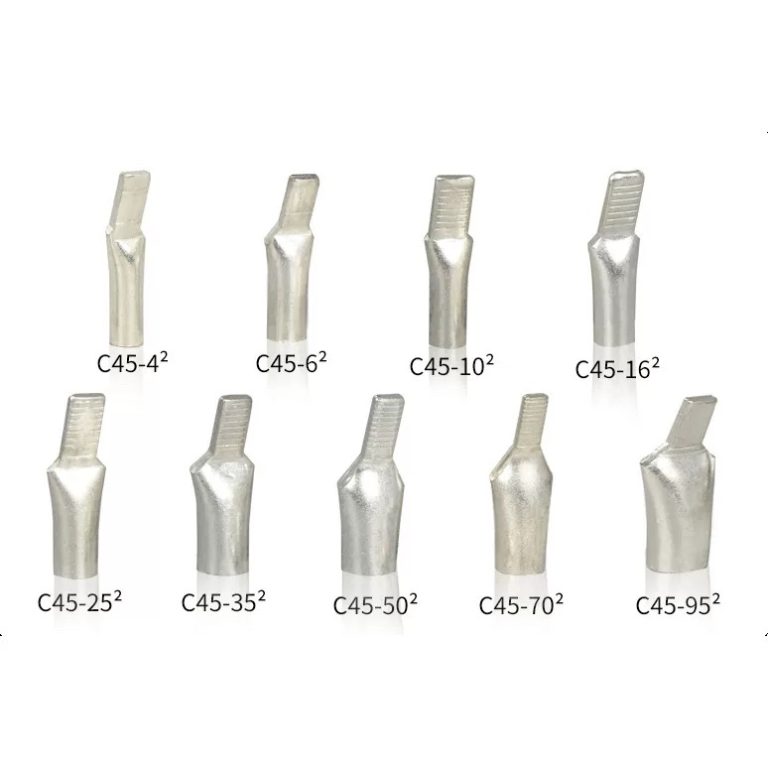
Flag quick-disconnect terminals are right-angle terminals designed for applications where space, wire routing, or component access is limited.
Compared with a conventional straight quick-disconnect terminal, the flag-style design can help:
- Route wires around tight spaces
- Reduce excessive wire bending
- Improve access in compact assemblies
- Simplify installation and service
- Support more efficient harness layouts
These terminals are commonly used in electrical assemblies, appliances, automotive components, HVAC equipment, industrial controls, and other applications requiring compact and serviceable wiring connections.
The exact terminal configuration should be selected based on the wire size, mating tab, current requirements, environmental conditions, and assembly requirements of the application.
Why Terminal Selection Matters in a Wire Harness
A terminal may be a relatively small component, but it plays an important role in the performance of the finished wire harness.
An improperly selected or poorly crimped terminal can lead to:
- High electrical resistance
- Weak mechanical retention
- Intermittent connections
- Performance issues under vibration
- Difficulties during final assembly
For this reason, OEM customers typically need more than a terminal supplier. They need a manufacturing partner that understands how the terminal, wire, crimp, connector, and finished harness work together.
A reliable connection starts with the right component selection and continues through controlled assembly and inspection.
Custom Wire Harness Assembly with Crimped Terminals
For many projects, buying loose terminals is not the most efficient option.
The production team may still need to:
- Cut the wire to length
- Strip the insulation
- Crimp the terminal
- Add connectors or secondary components
- Apply labels or heat shrink
- Perform electrical testing
- Package the finished assembly
When these steps are handled internally or across multiple suppliers, the process can increase labor requirements and create additional quality-control points.
A custom wire harness manufacturer can provide the finished assembly according to the customer’s specifications.
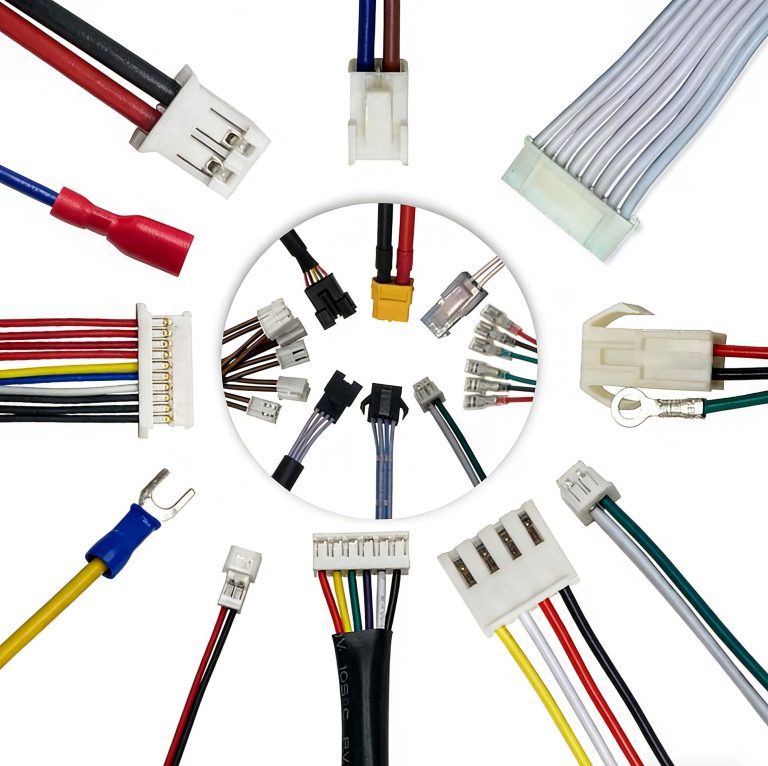
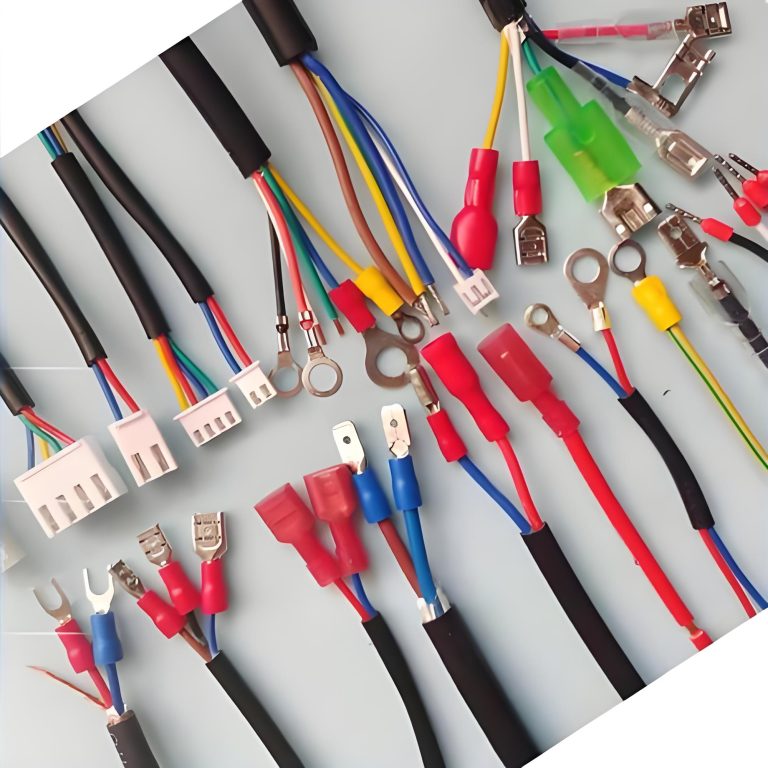
Depending on the project, a wire harness may include:
- Custom wire lengths
- Multiple wire gauges
- Flag quick-disconnect terminals
- Ring terminals
- Butt terminals
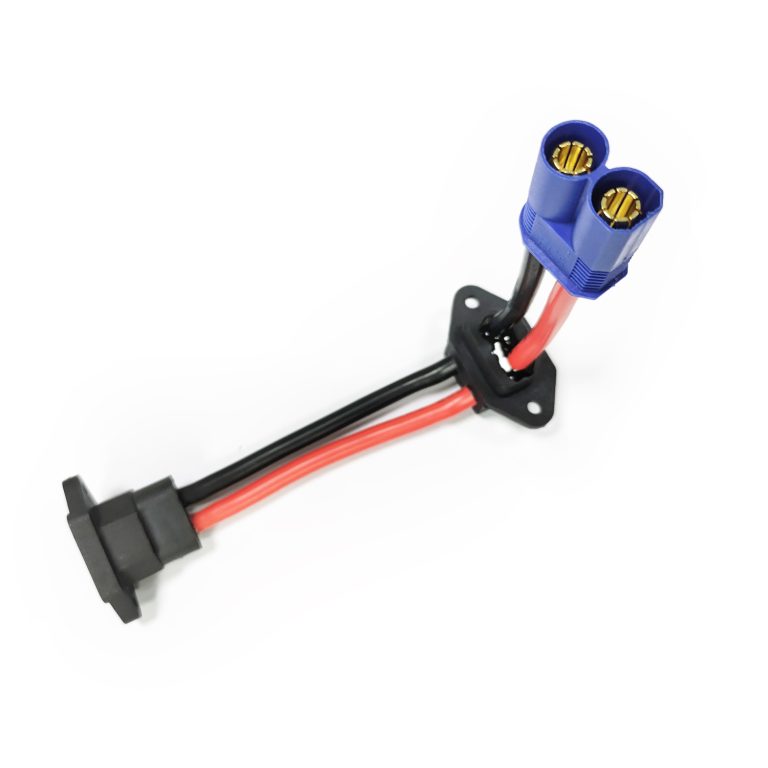
- Automotive connectors
- Waterproof connectors
- Heat shrink tubing
- Protective sleeving
- Labels and identification markers
The finished harness can be produced based on customer drawings, samples, BOMs, or technical specifications.
Built for OEM and Production Requirements
Different customers have different sourcing needs.
Some require a simple two-wire assembly with crimped terminals. Others need a multi-branch harness with multiple connectors, specific routing, and electrical testing.
A custom wire harness supplier should be able to support the project beyond the initial prototype.
Typical project stages may include:
Prototype and Sample Builds
Initial samples allow the customer to confirm:
- Wire length
- Terminal selection
- Connector compatibility
- Routing
- Fit and function
Low-Volume Production
For new product launches or specialized equipment, smaller production runs may be required before moving to higher volumes.
Ongoing Production
Once the design is approved, consistent production and repeatable quality become critical.
This is why it is important to work with a supplier that can support both development and production requirements.
What to Consider When Choosing a Flag Terminal
The correct terminal depends on the application. Before selecting a component, several factors should be reviewed.
Wire Gauge
The terminal must match the conductor size and be suitable for the required crimp.
Mating Tab Size
The terminal needs to be compatible with the corresponding male tab or connection point.
Electrical Requirements
Current and voltage requirements should be considered when selecting the terminal and wire combination.
Mechanical Requirements
Applications involving vibration, movement, or repeated service may require additional attention to terminal retention and crimp quality.
Environmental Conditions
Temperature, moisture, chemicals, and other environmental factors may affect the selection of the wire, terminal, insulation, and protective materials.
Assembly Space
The flag-style configuration can be particularly useful where a straight terminal would interfere with nearby components or create excessive wire bending.
More Than a Terminal Supplier
For an OEM project, the goal is usually not simply to purchase a box of terminals.
The goal is to receive a wiring assembly that is:
- Built to the required specifications
- Consistent from batch to batch
- Ready for installation
- Compatible with the customer’s product
- Supported by reliable production processes
As a wire harness manufacturer, we can help customers integrate flag quick-disconnect terminals into complete cable and wire harness assemblies.
Our capabilities may include:
- Wire cutting and stripping
- Terminal crimping
- Connector assembly
- Heat shrink processing
- Custom cable assemblies
- Wire harness assembly
- Continuity testing
- Short-circuit testing
- OEM production support
Whether you have a completed drawing or only an initial concept, our team can review the requirements and help determine a practical manufacturing approach.
Looking for a Custom Wire Harness Supplier?
If your project requires flag quick-disconnect terminals, the terminal is only the starting point.
The finished wire harness needs to meet the requirements of the complete application—from wire selection and terminal compatibility to crimp quality, assembly, and testing.
If you are sourcing custom wire harnesses, cable assemblies, or pre-crimped wires with quick-disconnect terminals, send us your:
- Drawing
- BOM
- Wire harness sample
- Terminal specifications
- Wire specifications
- Estimated annual volume
Our team can review your requirements and provide a practical solution for your project.