-
0769-38866368



How to Choose the Right Dupont Wire for Your Project
When sourcing Dupont terminal wires, choosing the right connector is only part of the job. Wire gauge, terminal crimping, connector configuration, wire length, pin count, and assembly requirements can all affect the performance and reliability of the finished product.
For OEMs, engineers, and purchasing teams, a better approach is to treat a Dupont terminal wire as part of a complete custom wiring harness or cable assembly, rather than as a simple connector with wires.
What Is a Dupont Terminal Wire?
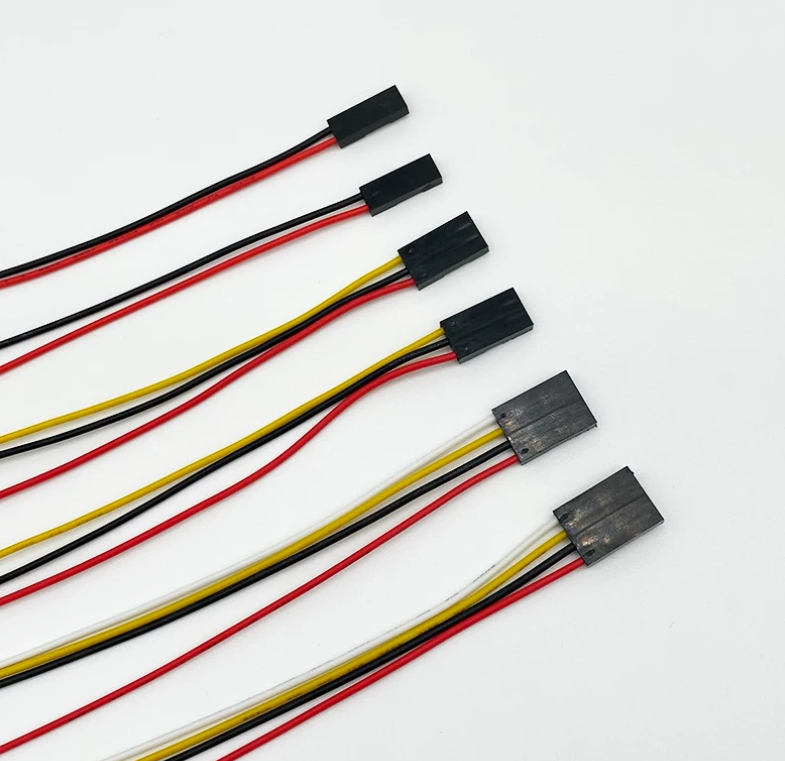
A Dupont terminal wire is a wire assembly using Dupont-style crimp terminals and connector housings. The commonly used configuration is the 2.54mm (0.100 inch) pitch Dupont connector, available in single-row and dual-row configurations.
These connectors are widely used for PCB connections, control boards, electronic equipment, computers, embedded systems, LED equipment, and other low-voltage electronic applications.
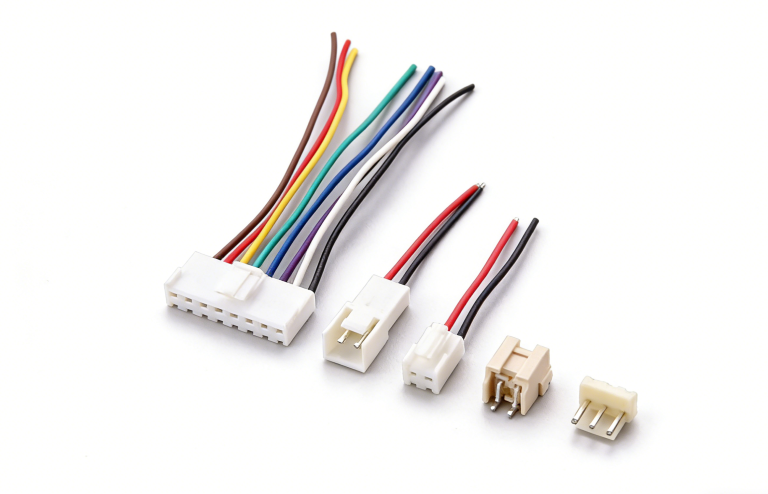
Depending on the project, a Dupont wire assembly can be supplied with male terminals, female terminals, different pin counts, different wire colors, and customized wire lengths.
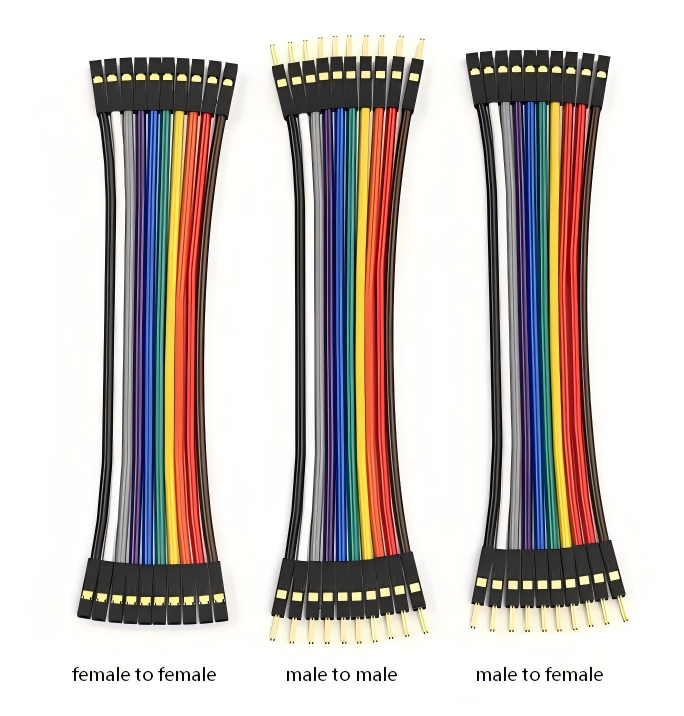
For example, 2.54mm Dupont wiring harnesses can be configured as male-to-female, female-to-female, male-to-male, connector-to-tinned wire, or connector-to-another connector assemblies.
Why 2.54mm Dupont Wire Harnesses Are Popular
One reason 2.54mm Dupont connectors remain popular is their flexibility.
For engineering and purchasing teams, the same basic connector format can be adapted to different circuit requirements by changing the number of positions, wire configuration, or termination style.
Common configurations include:
- 1–2 position single-row assemblies
- 3–10 position single-row assemblies
- Multi-position dual-row assemblies
- Male-to-female jumper wires
- Female-to-female wire harnesses
- Male-to-male jumper assemblies
- Connector-to-tinned wire assemblies
- Connector-to-open-end wire assemblies
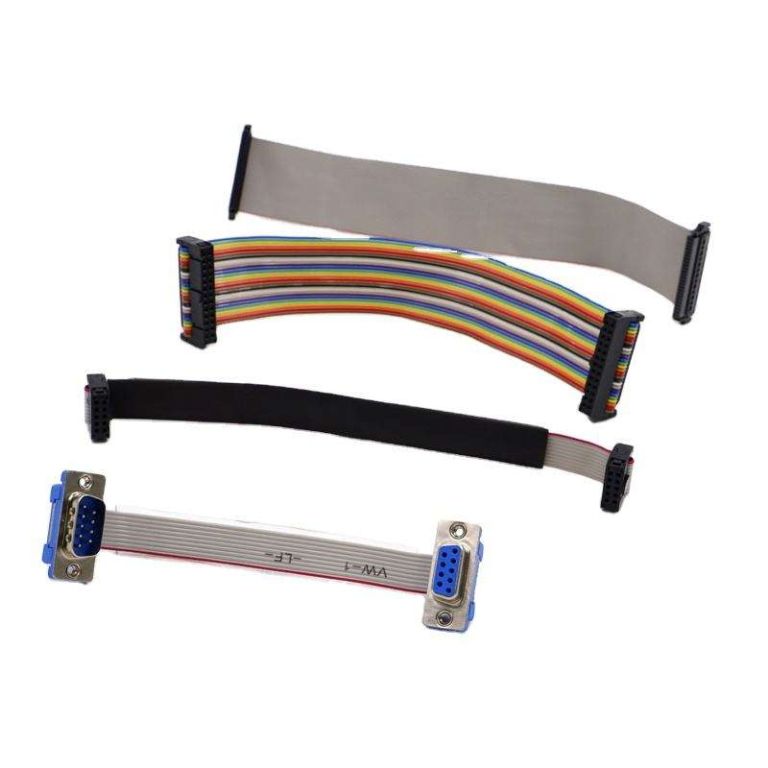
- Ribbon cable assemblies
- Custom cable assemblies with different connectors
Manufacturers of custom Dupont wire harnesses commonly offer both single-row and dual-row configurations, with customized wire lengths and wire colors based on customer requirements.
5 Key Specifications to Confirm Before Ordering Dupont Terminal Wires
If you are purchasing Dupont terminal wire assemblies for production, providing complete specifications at the beginning can help reduce engineering questions, sample revisions, and production delays.
1. Connector Pitch
The most common specification is 2.54mm pitch.
However, pitch should always be confirmed before production because different connector families can look similar while using different pitches.
For a purchasing team, the BOM, drawing, sample, or connector part number is the best way to avoid an incorrect match.
2. Number of Positions
Pin count directly affects the connector housing and assembly configuration.
Typical projects may require 2-pin, 3-pin, 4-pin, 6-pin, 8-pin, 10-pin, or larger multi-position connectors.
For example, a 2.54mm Dupont harness can use a single-row 4-pin connector for a simple PCB connection, while a dual-row connector may be selected when more circuits are required in a limited installation space.
3. Wire Gauge
Wire gauge should be selected according to the application’s current, voltage, temperature, mechanical requirements, and available space.
Common wire sizes used in Dupont-style harness assemblies include 24 AWG, 26 AWG, and 28 AWG, depending on the application and connector/terminal design.
The correct wire should also match the terminal’s applicable wire range. Some custom Dupont harness manufacturers, for example, specify UL1007 24–26 AWG wire for particular 2.54mm configurations.
4. Wire Length and Color
Wire length may seem like a simple specification, but it is important for production consistency.
Instead of specifying only “5-inch wire,” a production drawing should ideally define:
- Overall wire length
- Strip length
- Wire gauge
- Wire color
- Jacket material
- Terminal type
- Connector position
- Pin-to-pin relationship
Color coding can also make installation and maintenance easier, especially when a harness contains multiple circuits.
Custom harness suppliers commonly provide different wire colors and customized lengths according to customer requirements.
5. Terminal Crimp Quality
For a wiring harness manufacturer, the terminal crimp is one of the most important manufacturing steps.
A poor crimp can result in:
- High contact resistance
- Intermittent electrical connections
- Terminal pull-out
- Wire damage
- Assembly failures
- Field reliability problems
This is why a professional Dupont connector wire harness manufacturer should control stripping, crimp height, terminal position, conductor insertion, and pull-force performance during production.
The connector housing may look perfect from the outside, but the quality of the internal crimp connection determines much of the harness’s actual reliability.
Dupont Terminal Wire vs. Complete Wiring Harness
A common mistake when sourcing these products is focusing only on the connector.
For low-volume prototyping, buying loose Dupont terminals or jumper wires may be sufficient. But for OEM production, a custom Dupont wiring harness can provide a much more controlled assembly.
A complete harness can include:
Wire + Crimp Terminal + Connector Housing + Secondary Processing + Testing + Labeling
This means the customer receives a ready-to-install component instead of having to manually assemble individual wires.
For manufacturers, this can reduce assembly labor and help standardize the electrical connection between the PCB, control board, sensor, or electronic module.
What Applications Use Dupont Terminal Wire?
Dupont-style 2.54mm wire harnesses are commonly used in low-voltage electronic and control applications.
Potential applications include:
- PCB wiring
- Computer and electronic equipment
- Industrial control systems
- LED lighting
- Consumer electronics
- Embedded systems
- Test equipment
- Development boards
- Control panels
- Small appliances
- Electronic modules
- Internal equipment wiring
The final connector, wire gauge, insulation, and electrical specifications should always be selected according to the actual application requirements.
Custom Dupont Wire Harness Manufacturing
For OEM buyers, the most useful supplier is not necessarily the company offering the lowest unit price. A capable supplier should be able to work from a drawing, BOM, sample, or wiring specification and convert the requirements into a repeatable production process.
A custom Dupont wire harness supplier can help with:
- Connector selection
- Wire gauge selection
- Wire length customization
- Male/female terminal configuration
- Single-row or dual-row connectors
- Wire color customization
- Terminal crimping
- Connector-to-wire assembly
- Connector-to-connector assembly
- Continuity testing
- Pull-force testing
- Labeling and packaging
Custom wire harness manufacturers commonly support OEM/ODM projects and produce assemblies according to customer drawings or specifications.
What Should You Send to a Dupont Wire Harness Manufacturer?
If you are requesting a quotation, providing more information can make the RFQ process much faster.
Ideally, send:
- Connector type or part number
- Connector pitch
- Number of positions
- Male or female terminal
- Wire gauge
- Wire type
- Wire length
- Wire color
- Pinout or wiring diagram
- Required quantity
- Application environment
- Required certifications, if applicable
If you already have a physical sample, sending the sample together with a basic drawing or photos can also help the manufacturer verify the configuration.
Why Work With a Custom Wiring Harness Manufacturer?
For purchasing teams, sourcing a finished Dupont terminal wire assembly instead of individual components can simplify the supply chain.
A capable wiring harness manufacturer can manage the connector, wire, terminal, crimping, assembly, inspection, and testing as one production process.
This is particularly useful when your project requires thousands of pieces with consistent dimensions and electrical performance.
Instead of asking only:
“How much is a Dupont connector wire?”
A better purchasing question is:
“Can you manufacture this Dupont 2.54mm wiring harness according to our drawing and production requirements?”
That shift can make a significant difference when moving from prototype quantities to mass production.
Final Thoughts
Dupont terminal wires are simple-looking components, but a reliable assembly depends on much more than the connector itself.
For OEM and industrial applications, the right combination of connector pitch, terminal type, wire gauge, wire length, crimp quality, and testing is essential.
If your project requires a custom Dupont 2.54mm wire harness, providing a drawing, BOM, sample, or wiring specification allows the manufacturer to evaluate the requirements and develop a suitable cable assembly.
A professional custom wiring harness supplier can also help you move from prototype assembly to stable mass production while maintaining consistent quality across every batch.